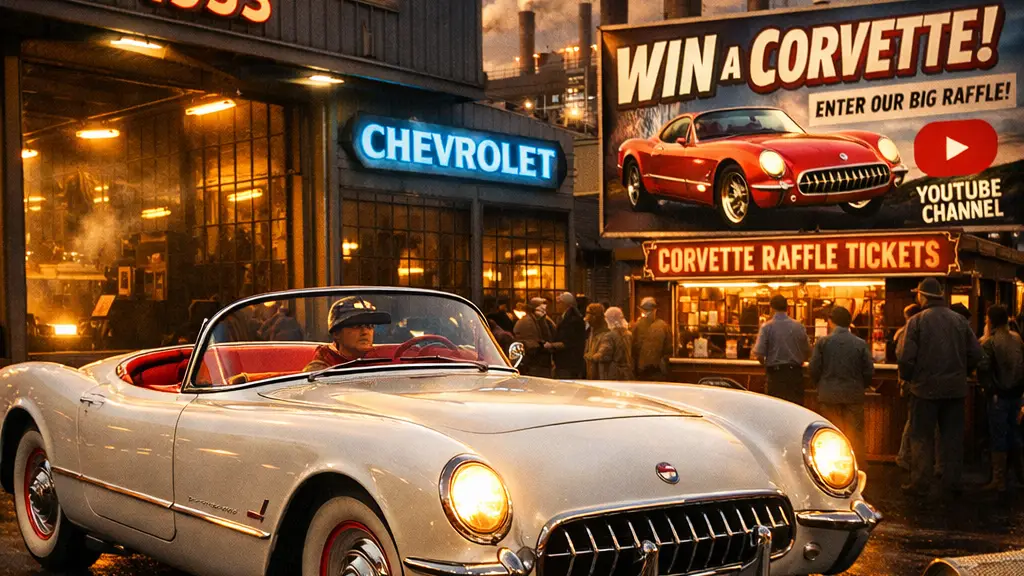
The Chevrolet Corvette rolled out of Flint, Michigan in 1953 and has never stopped—eight generations, no domestic rivals left standing. It nearly didn't happen. Chevrolet was bleeding market share, and brand manager Thomas Keating saw a sports car as the only remedy. The answer was fiberglass over a 3.9-liter straight-six, two-speed automatic— America's answer to the lean British roadsters of the postwar years. It debuted at GM's 1953 Motorama in Waldorf-Astoria, made it to production, and promptly sold almost none of its 300 hand-assembled units. A quiet, uncertain beginning for what would become America's sports car.
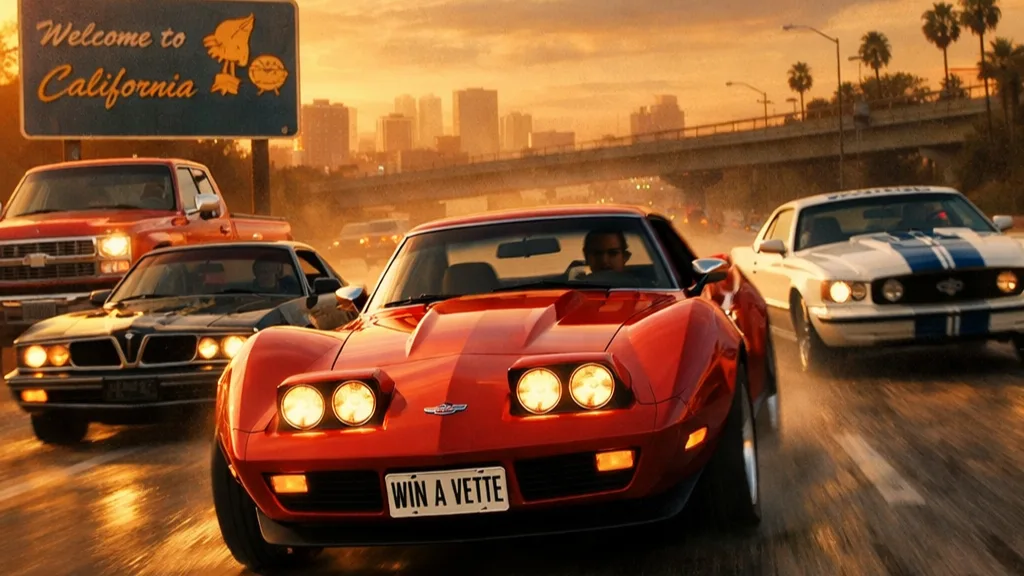
Model year 1976 introduces a revised intake manifold that bumps output to 180 and 210 horsepower, depending on trim. In a comparison test against the Dodge Dart Sport, Pontiac Firebird Trans Am, Chevrolet C-10 Silverado, and Ford Mustang II Cobra II, the Corvette pulls ahead of them all, cementing its reputation as the fastest American production car of 1976. That same bicentennial year, we drive one north to Alaska, pushing toward the Northwest Passage—frozen tundra, unpaved switchbacks, and roads that were never roads to begin with. The chunky aftermarket tires fling mud up across the flanks and hood in long dark streaks, leaving behind "the scars of its confrontation with a world that nobody had ever designed a Stingray for."