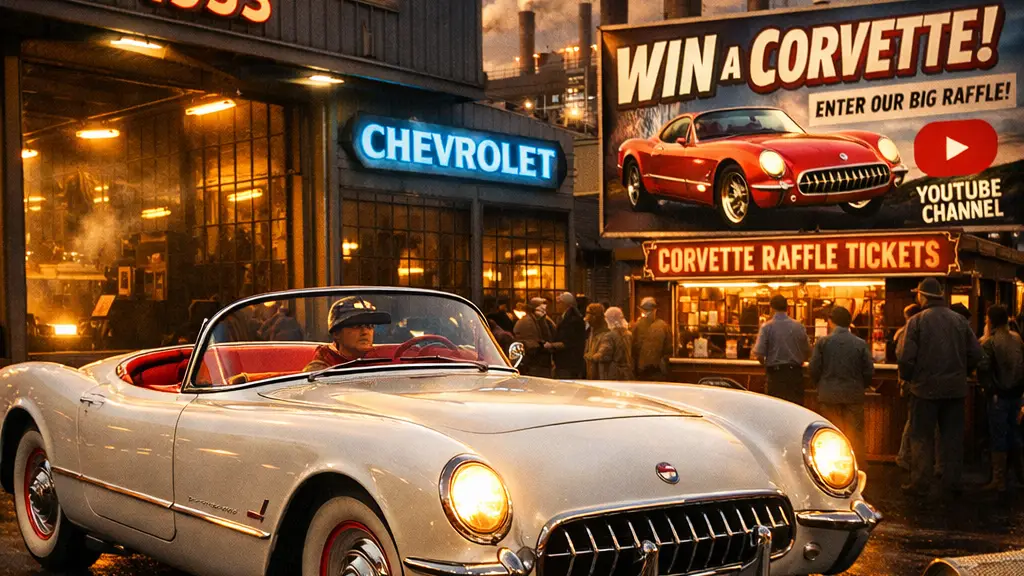
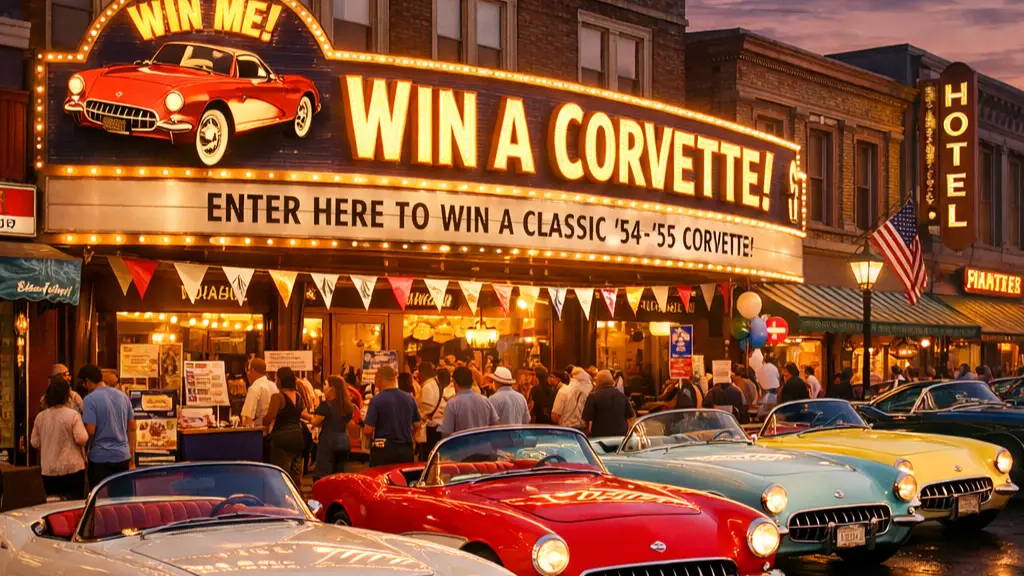
Rolling out of Flint, Michigan in 1953, the Chevrolet Corvette has stood as General Motors' crown jewel across eight generations—a two-seater that has outlasted every domestic rival from Ford, Chrysler, and American Motors, and remains the only sports car of its kind still continuously produced on American soil.
It nearly didn't happen. In the early 1950s, Chevrolet was bleeding market share, and brand manager Thomas Keating saw a sports car as the only remedy. Developed under the code name Project Opel, it was an American answer to the lean British roadsters of the postwar years—fiberglass over a 3.9-liter straight-six, with a two-speed automatic. It debuted at GM's 1953 Motorama show in the Waldorf-Astoria to an immediately won-over crowd, survived the show circuit, and made it to production—though the 300 hand-assembled units that followed found almost no buyers, a quiet, uncertain beginning for what would become America's sports car.
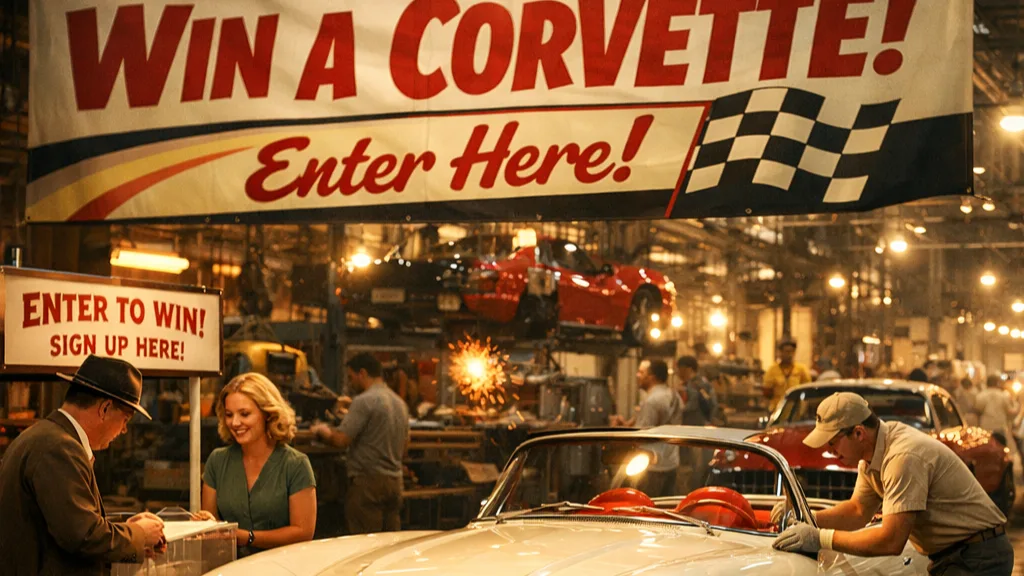
The first Corvettes rolled off a modest assembly line in Flint, Michigan, but by the close of 1953, Chevrolet had relocated production to Saint Louis, Missouri. The 1954 model arrived with three new color options— black, red, and blue— and swapped its black top for a tan one. A revised camshaft squeezed five additional horsepower from the six-cylinder engine. Even so, sales remained sluggish; the Saint Louis plant could handle 10,000 units a year, but only 3,640 found buyers in 1954. The Corvette's fortunes turned in 1955, when Chevrolet had the good sense to drop a 4.3-liter (265-cubic-inch) V-8 under the hood. The 195-hp engine came paired with an available three-speed manual transmission, and for the first time, the Corvette delivered the kind of performance a sports car was supposed to.