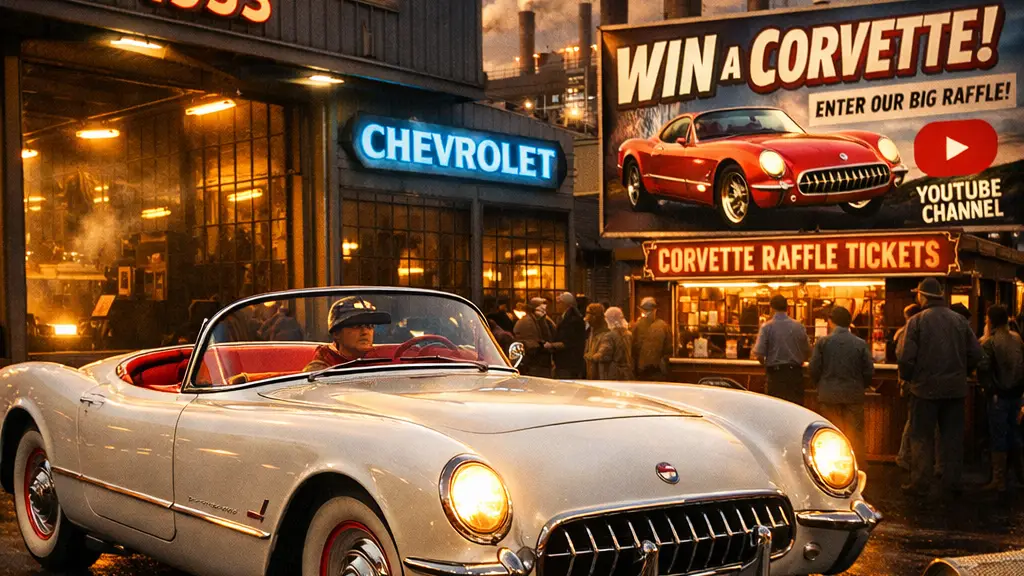
The Chevrolet Corvette rolled out of Flint, Michigan in 1953 and has never stopped— eight generations, no domestic rivals left standing, the only sports car still continuously produced on American soil. It nearly didn't happen. Chevrolet was bleeding market share, and brand manager Thomas Keating saw a sports car as the only remedy. Developed as Project Opel, it was America's answer to the lean British roadsters of the postwar years: fiberglass over a 3.9-liter straight-six, two-speed automatic. It debuted at GM's 1953 Motorama show in the Waldorf-Astoria to an immediately won-over crowd and made it to production—though the 300 hand-assembled units that followed found almost no buyers, a quiet, uncertain beginning for what would become America's sports car.
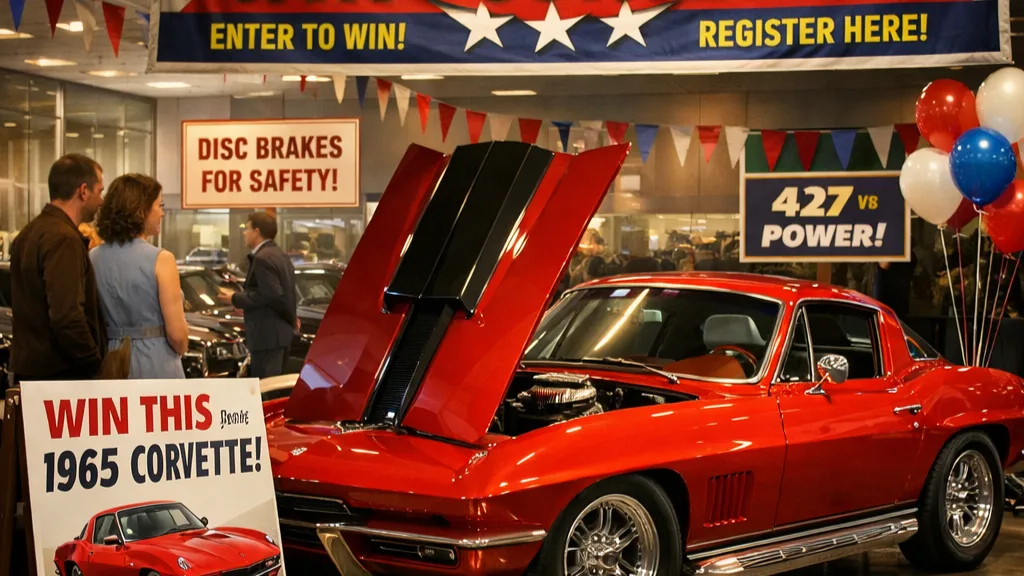
The 1965 Corvette is genuinely a conflicted machine—it finally gets responsible, safety-conscious disc brakes, and then immediately gets an engine so powerful it arguably makes those brakes necessary. That irony is the conflict, and the original passage gestures at it with the word "timely" but doesn't lean into it.
Chevrolet responds to critics of the Corvette's drum brakes by equipping the car with standard four-wheel disc brakes for the 1965 model year sensible, safety-minded upgrade that Chevrolet then immediately complicates by plugging its big-block V-8 under the hood. (Buyers unconvinced by progress can still opt for drums at a credit of $64.50.) The optional engine displaces 6.5 liters (396 cubic inches) and produces a monstrous 425 gross horsepower figure many suspect is underrated, which is either reassuring or alarming depending on how you feel about the disc brakes.