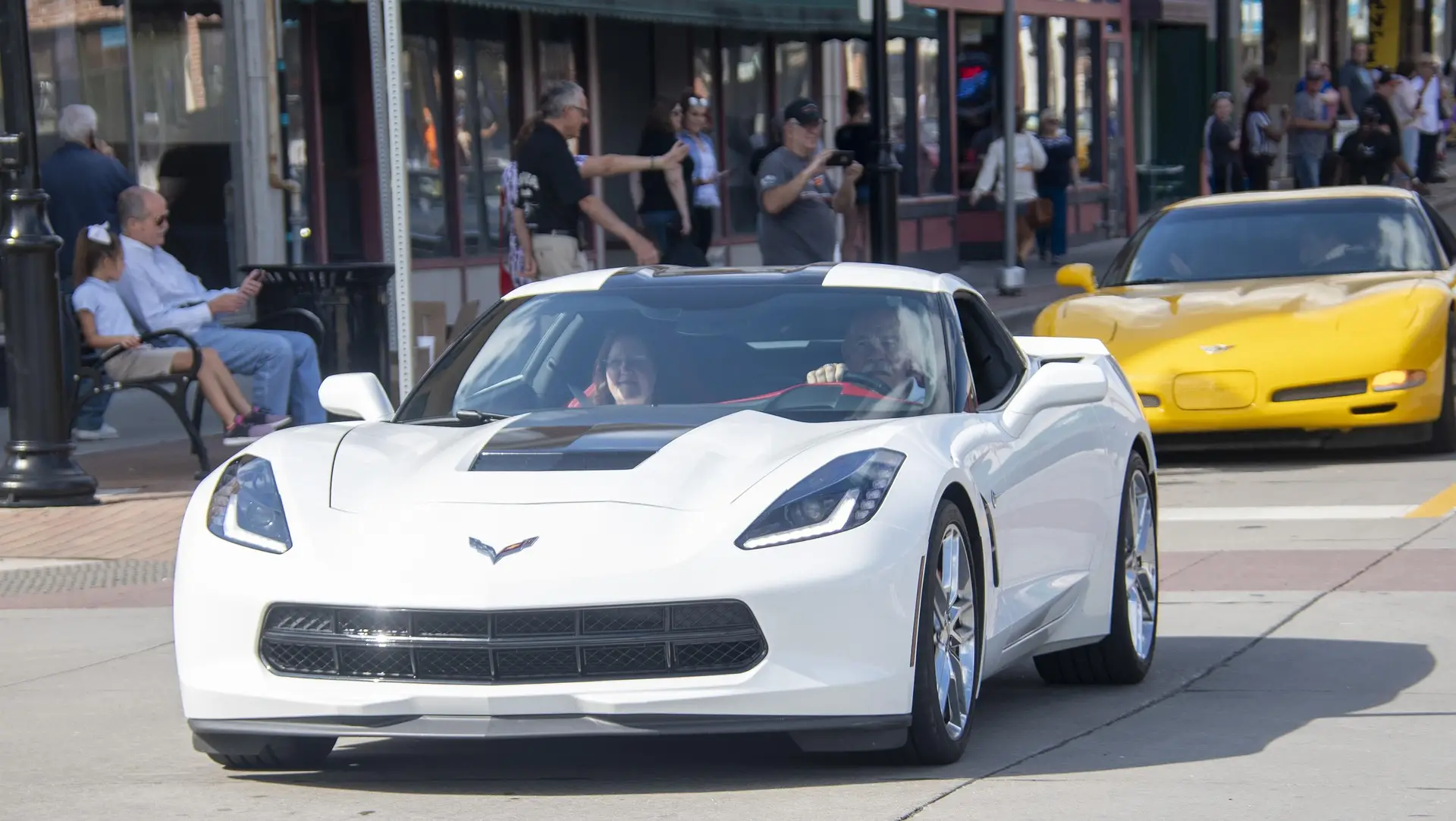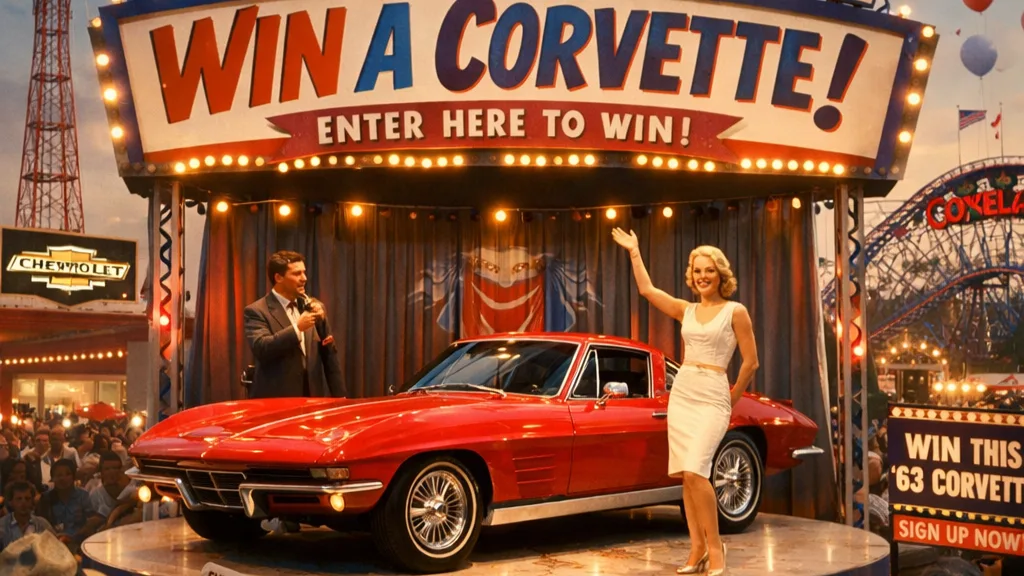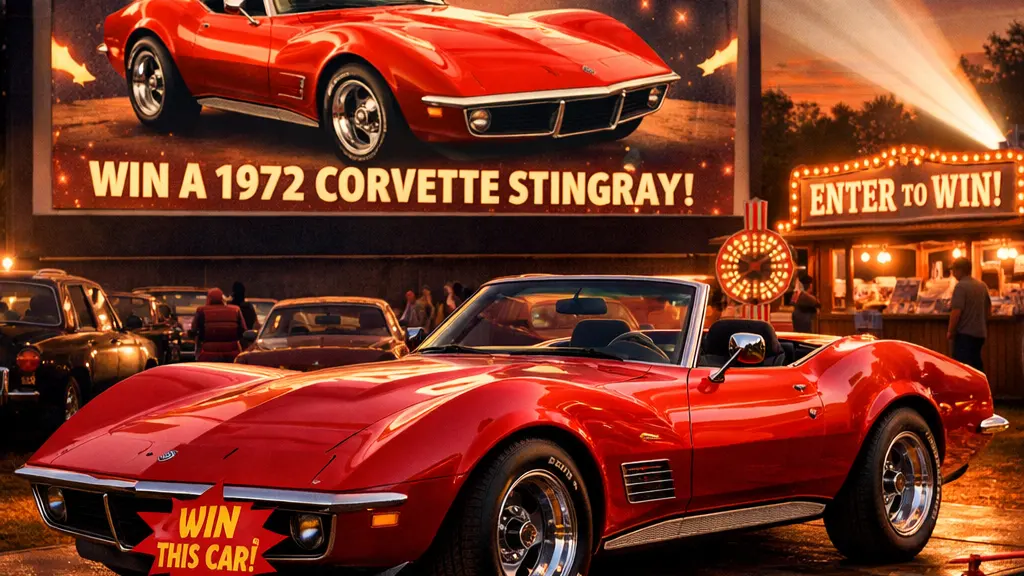
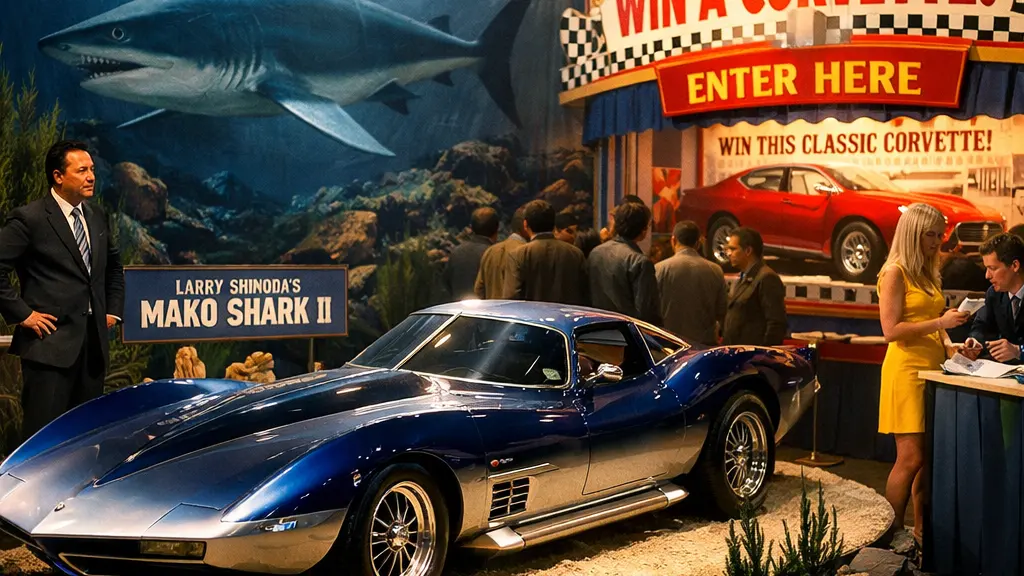
The Chevrolet Corvette rolled out of Flint, Michigan in 1953 and has never stopped— eight generations, no domestic rivals left standing, the only sports car still continuously produced on American soil. It nearly didn't happen. Chevrolet was bleeding market share, and brand manager Thomas Keating saw a sports car as the only remedy. Developed as Project Opel, it was America's answer to the lean British roadsters of the postwar years: fiberglass over a 3.9-liter straight-six, two-speed automatic. It debuted at GM's 1953 Motorama show in the Waldorf-Astoria to an immediately won-over crowd and made it to production—though the 300 hand-assembled units that followed found almost no buyers, a quiet, uncertain beginning for what would become America's sports car. Land vehicle, Vehicle, Car, Coupé, Sports car, Automotive design, Classic car, Sedan, Performance car, Hardtop.After five model years, casts a long shadow over the new body: its silhouette is lower and wider, with a dramatically tapered tail, a pronounced spine running the length of the hood, and deeply sculpted flanks that ripple like the side of a fish. The coupe trades its formal rear storage area for a sleeker roofline, now featuring removable T-top roof panels that open the cabin to the sky. Beneath all that new skin, however, the chassis and suspension carry over nearly unchanged from the C2. The engines do too, though the old two-speed automatic is swapped for a three-speed unit.
the C2 Corvette gives way to the C3 for 1968. Designer Larry Shinoda's Mako Shark II concept car