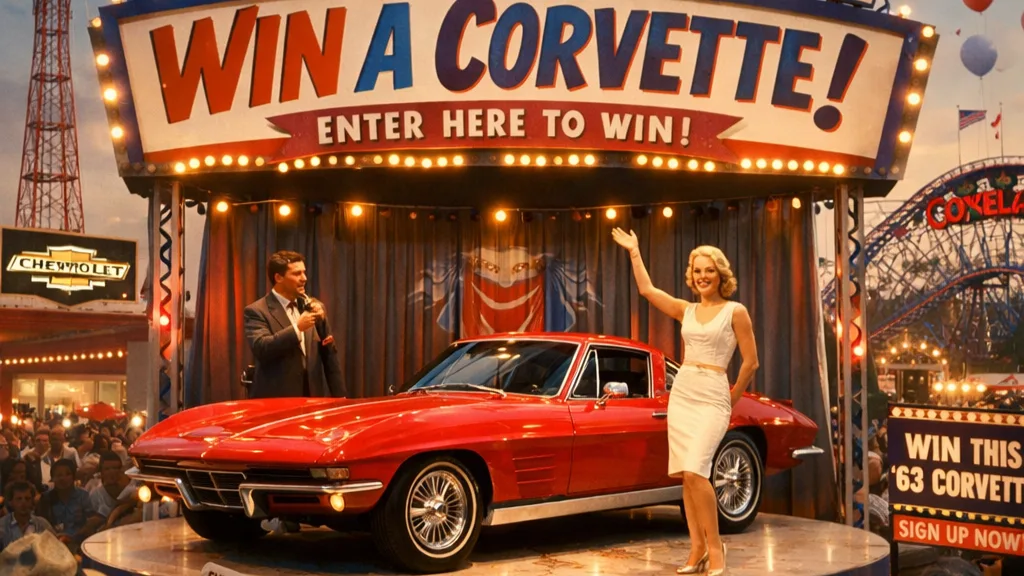
The Chevrolet Corvette rolled out of Flint, Michigan in 1953 and has never stopped— eight generations, no domestic rivals left standing, the only sports car still continuously produced on American soil. It nearly didn't happen. Chevrolet was bleeding market share, and brand manager Thomas Keating saw a sports car as the only remedy. Developed as Project Opel, it was America's answer to the lean British roadsters of the postwar years: fiberglass over a 3.9-liter straight-six, two-speed automatic. It debuted at GM's 1953 Motorama show in the Waldorf-Astoria to an immediately won-over crowd and made it to production—though the 300 hand-assembled units that followed found almost no buyers, a quiet, uncertain beginning for what would become America's sports car.
1958–1960: Four for the Road The Corvette goes under the knife again and comes out swinging— a revised front end, a new dual-headlight design, and an interior finally rearranged with the driver in mind: the tachometer yanked from the center of the dash and planted directly below the speedometer, where it belongs. Power keeps climbing. The most potent 1958 model wrings 290 horses from its fuel-injected V-8. By 1960, that number hits 315—and the Corvette is no longer just keeping up. It is pulling away.