The Chevrolet Corvette rolled out of Flint, Michigan in 1953 and has never stopped—eight generations, no domestic rivals left standing. It nearly didn't happen. Chevrolet was bleeding market share, and brand manager Thomas Keating saw a sports car as the only remedy. The answer was fiberglass over a 3.9-liter straight-six, two-speed automatic— America's answer to the lean British roadsters of the postwar years. It debuted at GM's 1953 Motorama in Waldorf-Astoria, made it to production, and promptly sold almost none of its 300 hand-assembled units. A quiet, uncertain beginning for what would become America's sports car.
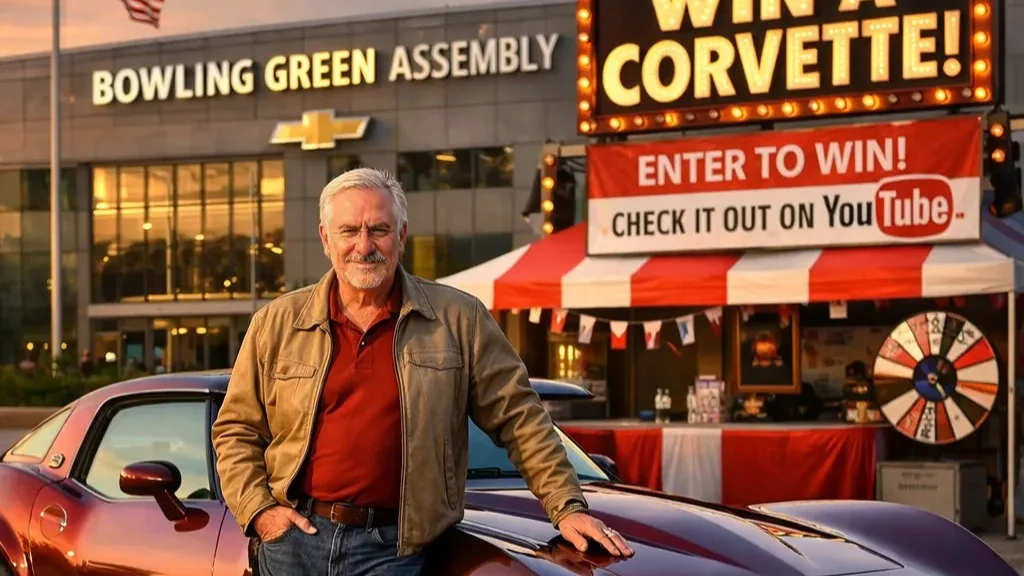
1979 Chevrolet Corvette By the end of 1981, Corvette production is moved exclusively to the company's gleaming new Bowling Green, Kentucky, factory, leaving the old Saint Louis, Missouri, plant to go dark and quiet for the last time. The sports car's age is beginning to show its wear, however— in a humbling five-car comparison test, the Corvette trails not only the exotic Ferrari 308GTSi and the precise Porsche 911 SC, but even the upstart Datsun 280ZX Turbo and the stainless-steel curiosity of the DeLorean, finishing dead last. Chevy marks 1982 as the third-generation Corvette's final year, a quiet send-off for a car that had once turned every head on every street in America. Where the 1968 original had roared with promise, the 1982 edition goes out with a single powertrain option: a 200-hp 5.7-liter V-8 paired to a four-speed automatic—adequate, but hardly the stuff of legend.